Trinidad State College And Future Aquaponic Classes
With the USDA now looking into the certification of classifying aquaponics an organic food, there are also other questions being raised whether or not the legalities can actually be changed.
You see aquaponics is not just about growing organic foods but also raising healthy fish. While there are some fantastic teachers in the aquaponics industry how many of them actually have a certification in fish diseases and or the proper care and treatment for sick fish?
For many people this might seem like we are splitting hairs but if you do not go to school to get a degree-certification in aquaculture, the disease issue could become a real problem at some point.
Stress is still the biggest contributor to disease forming in fish and people in the aquaculture industry who are breeding, raising and farming fish are already aware of these problems.
For many people this might seem like we are splitting hairs but if you do not go to school to get a degree-certification in aquaculture, the disease issue could become a real problem at some point.
Stress is still the biggest contributor to disease forming in fish and people in the aquaculture industry who are breeding, raising and farming fish are already aware of these problems.
USDA Taskforce
A task force has now been assigned from USDA and they will be looking into every aspect of the aquaponics industry. Does this mean there will be certifications, licensing and more restrictions once everything is reviewed? The fact is people might have to get ready for some big industry changes and once the new regulations are set in place, that could mean good news or not for current aquaponic farms.
My thoughts are if the USDA was to give an organic certification to the aquaponics industry, it should include a good knowledge base concerning some of the diseases fish can carry onto humans.
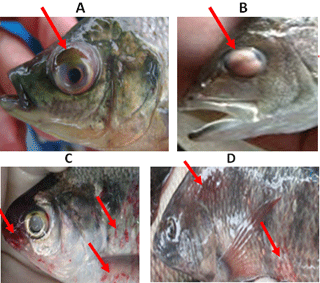
Picture Source Mad Fish Disease:
Fish TB (MYCOBACTERIUM MARINUM), also called fish tuberculosis, fish tank granuloma, swimming pool granuloma. Related to human TB and leprosy.
MAD FISH DISEASE ... caused by STREPTOCOCCUS INIAE.
Recently reported from handling tilapia. Infection via puncture wounds.
SALMONELLA... over 1600 serotypes identified.
Infection by ingestion. Carried by many types of animals.
ERYSIPELOTHRIX RHUSIOPATHIAE, also known as erythema migrans, fish-handler's disease, fish poisoning, fish hand, sealer's finger, whale finger, blubber finger, etc.
VIBRIO infections. Several species can infect humans: V. ALGINOLYTICUS (wound infections), V.DAMSELA (wound/systemic infections), V. PARAHAEMOLYTICUS (gastroenteritis/wound infections),V.VULNIFICUS (wound/gastroenteritis/systemic infections).
Source for disease: http://www.fishlore.com/Articles/DiseasesTransmittedToHumans.htm
The below points are valid causes for concern for the USDA and why we believe that colleges will eventually play a more significant role in the certification and education process of aquaponics.
• Careful selection of sites for aquaculture farms.
• Protection of adjacent ecosystems.
• Active avoidance of conflicts with other users of the aquatic resources (e.g., fishermen)
• Prohibition of chemicals (e.g.. as anti-fouling agents in net pens) .
• Natural remedies and treatments in the case of disease.
• Feedstuff from organic agriculture.
• Fishmeal and - oil in feed derived from by-products of fish processed for human consumption (no dedicated "feed fishery").
• Prohibition of GMOs, neither in feedstuff, nor in the stock itself.
• Processing according to organic standards.
"According to a Consumer Reports magazine food labeling poll, some 74 percent of consumers are concerned about environmental pollution from “organic” fish. The poll also showed that 91 percent of consumers want contaminants in fish to be absent or present only at very low levels." See more information at the link below...
Trinidad State College

The Trinidad State College in Colorado has a fantastic aquaculture program running, where they offer a 2 year accredited degree. They now want to expand their curriculum into an aquaponics certification and the ASC Magazine has been asked to contribute coursework to this process. We have a team of great writers who will be helping out and making suggestions to aid in the perfection of this aquaponic coursework.
We are proud and happy to help out the college and we believe this is the right course of action in furthering the education process regarding the future of aquaponics.
If you would like to join the magazine please check out our main subscription page below:
Cheers
Victoria


